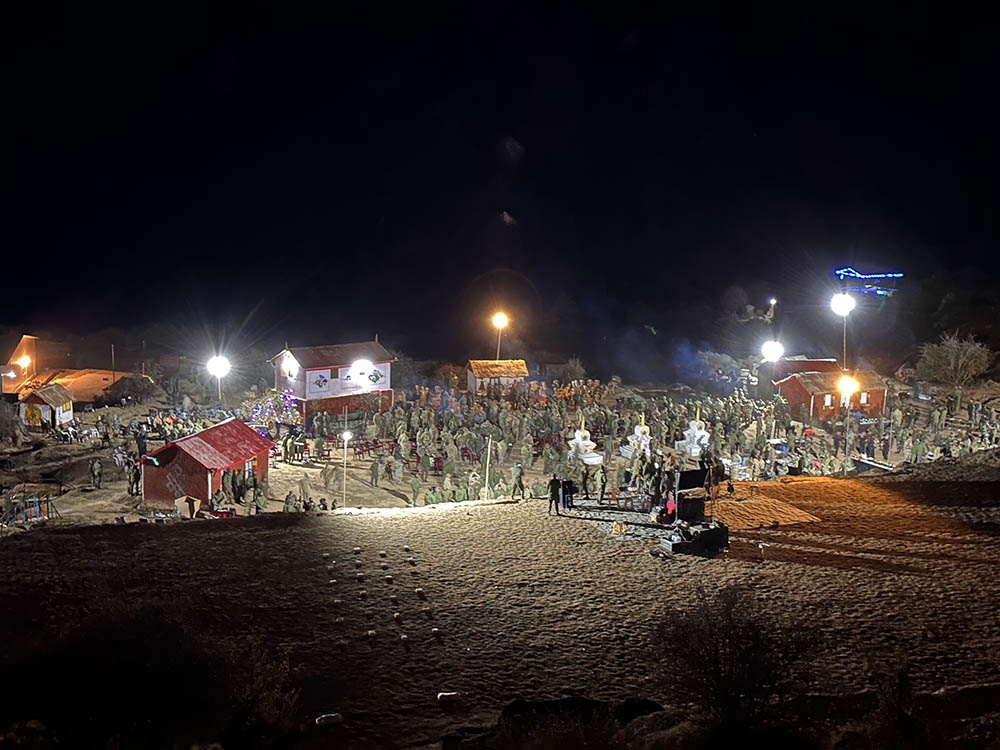
There I was, deep in the Indian Himalayas, stumbling up a steep, rocky slope with a camera slung over my shoulder, trying to keep my footing. My objective was to capture something entirely surreal: a live guitar performance of a U.S. Army General playing Nirvana’s “Smells Like Teen Spirit” alongside a group of soldiers from the 9th Assam Regiment of the Indian Army. I drew a breath, steadied my lens, took the photo, and composed a short, real-time tweet.
The next morning, it had amassed over 2 billion views.
That’s an impossible number with a U.S.-based audience - but we were operating smack-dab between the two most populous countries in the world. More importantly, just a week prior, public and media sentiment had been trending strongly against the U.S. Army being there at all—perched just 30 kilometers away from the highly sensitive India-China border, the ‘line of actual control’.
While the viral internet saw a spontaneous moment of musical diplomacy, behind the scenes was a massive, multi-faceted orchestration of humanitarian aid, international public affairs, and high-stakes media management. As a civilian leading this communication effort for the 11th Airborne Division, I found myself directing complex operational workflows across multiple time zones—managing personnel stationed on the ground in the Himalayas while simultaneously coordinating with support teams back in Alaska and Hawaii to synchronize our digital output.
Replicating a 2-billion-impression reach on command isn’t a formula you can simply copy and paste. It wasn’t just luck, either; it was the result of building an incredibly aggressive, omni-channel media operation under restrictive conditions. Our direct messaging architecture spanned the division’s newly established website, Facebook, Instagram, and Twitter channels. However, the true catalyst for our historic scale was intense stakeholder management and face-to-face media relations. We physically escorted a contingent of 30 Indian reporters up and down that rugged mountain terrain, building deep professional trust that converted a localized humanitarian mission into a massive wave of print, broadcast, and web-based international coverage.
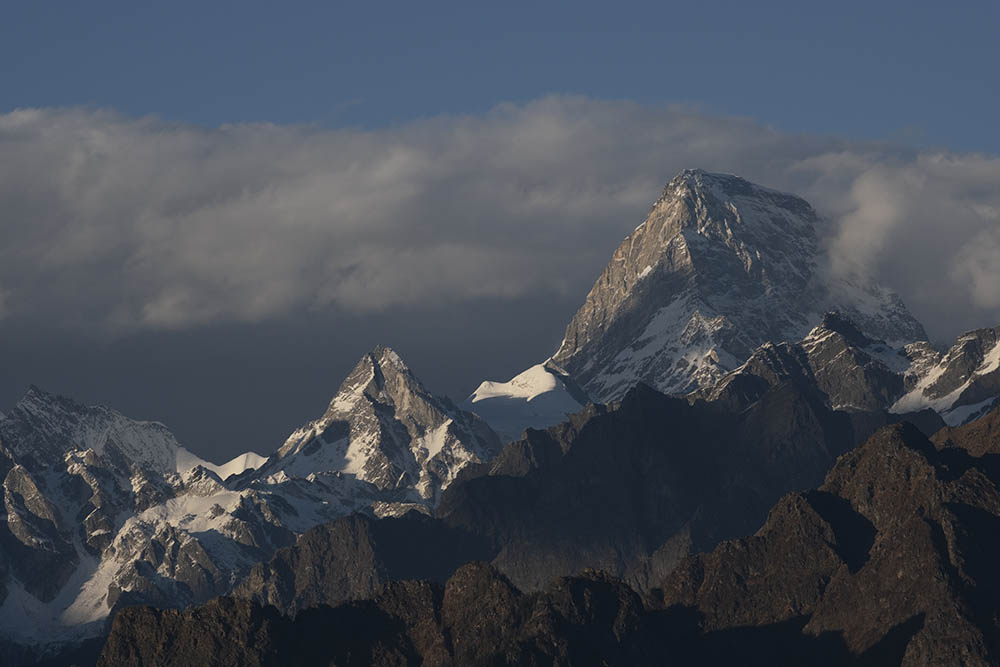
Photo
A concert in the Himalayas.
Benjamin Wilson
The viral cross-border campaign radically shifted the geopolitical narrative, transforming a tense regional presence into a widely celebrated story of cross-cultural partnership. The mission was ultimately recognized with official awards for its profound impact on international relations. But out in the field, away from the accolades, it served as a permanent reminder of a foundational communication truth: sometimes, the most effective way to manage a complex geopolitical crisis is to listen for the shared human rhythms already happening on the ground.