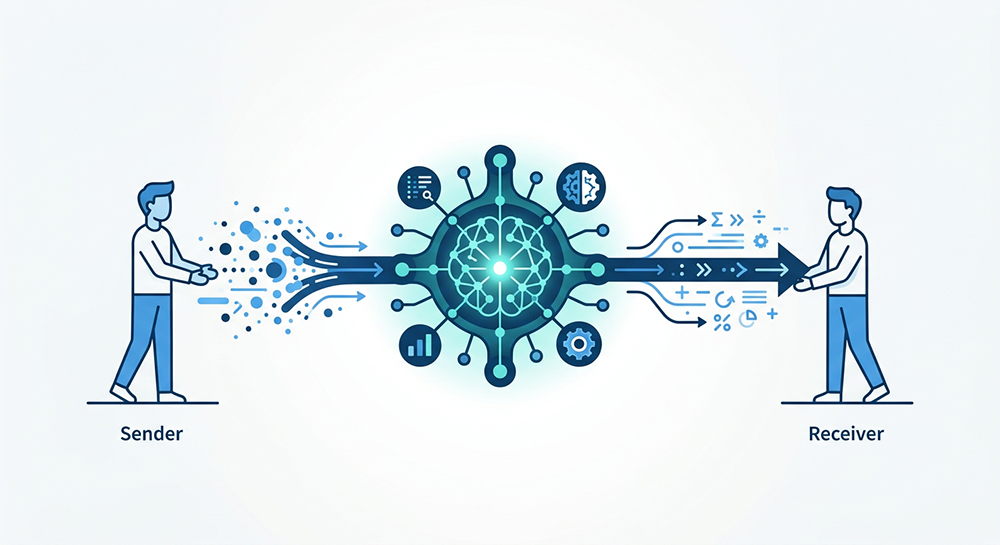
We have seen the problem with AI, and it is us. This was the premise that started my whole multi-model AI content grading system.
Foundation
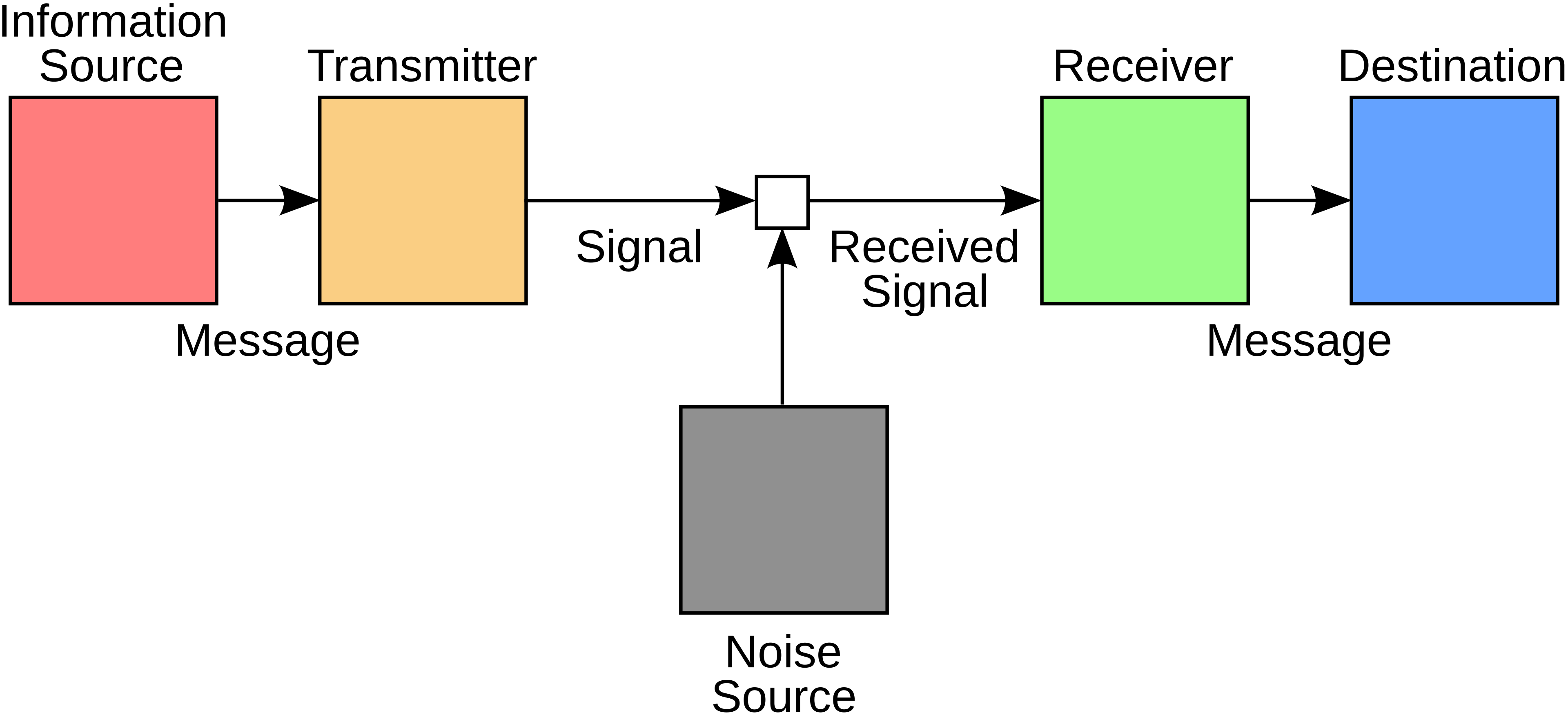
First, let’s talk about communication models and cycles. For the most part, communication models are built based on the Shannon-Weaver model, which is a linear communication model. It was built to model how landline telephone communications work:
Infographic
The Shannon-Weaver linear model of communication
By User:Phlsph7 - Own work based on: Shannon communication system.svg by https://en.wikipedia.org/wiki/User:Wanderingstan and https://commons.wikimedia.org/wiki/User:Stannered, CC0, https://commons.wikimedia.org/w/index.php?curid=125086847
As most models do, it models a complex process in a simple way. In reality, there are many different layers that cause different interpretations, and the channel, social context, current events, phase of the moon, how happy your dog was this morning, et cetera, all affect the sender, the receiver, and the feedback loop.
I find it to be an interesting model, and it’s the basis of communication theories today.
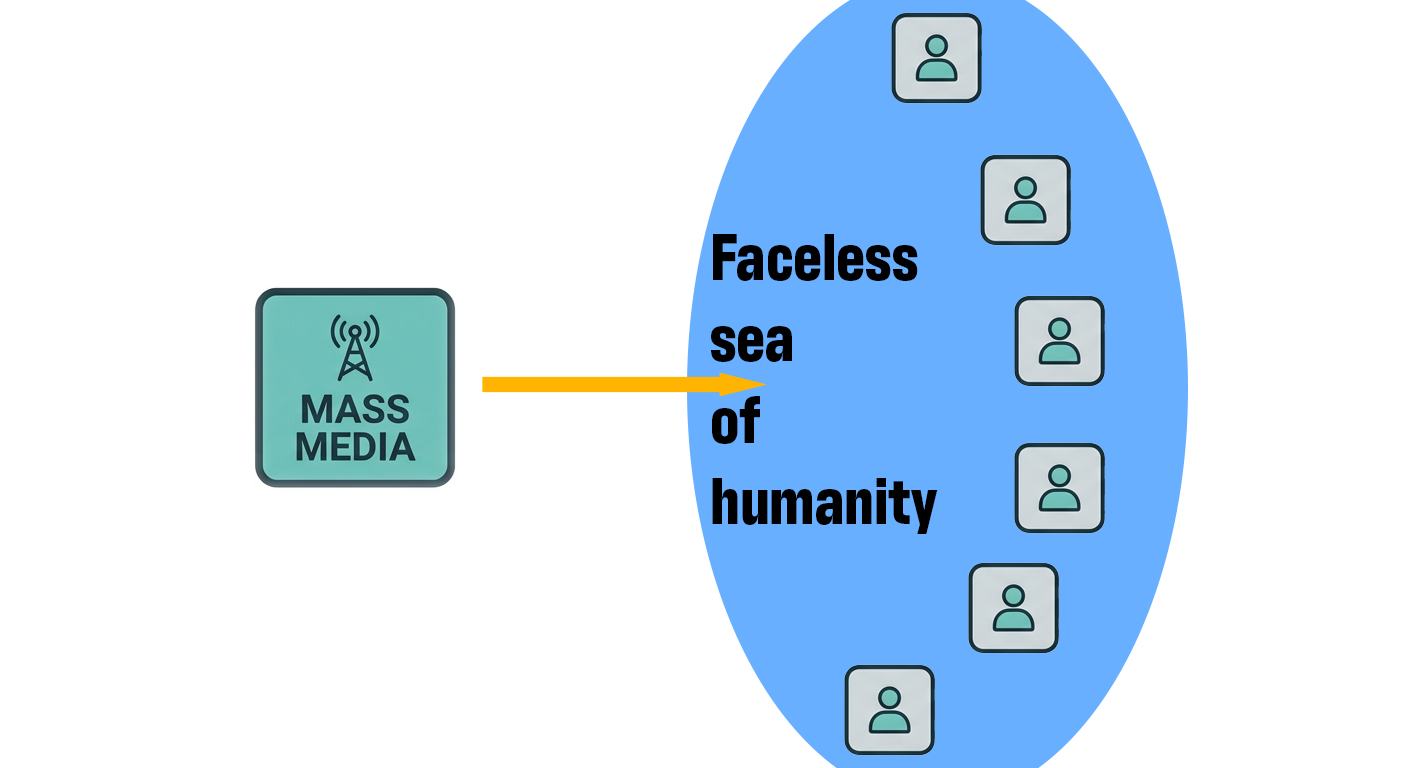
Then, we have mass communication theory, which I, personally, don’t favor, for a number of reasons. It was an earlier attempt to model a one-to-many communications process, but it doesn’t allow for the many to reply. It supposes several things;
- Messages can be unidirectional
- There is an asymmetric power dynamic, where the speaker using mass media can force the public to listen
- The public are passive consumers, accepting all incoming messages without thought or interpretation
- As a communicator, you can model all people as one person, and speak to that person
- The sender of the message is insulated from any feedback, included violent or highly negative feedback
- It models all receivers as a faceless sea of humanity
Infographic
A theory of mass media
By Ben Wilson
It just doesn’t work, in practice or principle. Certain media - TV and Radio are two - can very closely resemble this process. But the unidirectionality of messaging is an illusion; the public always provides feedback, just not on the same time scale. The sender has the advantage of space-time compression, where the public must rely on normal-time feedback. This time dynamic may make it seem as if mass media have massive power, but in essence, they’re just slow to listen. This idea is pervasive, though; that you can send information in one direction and not care about the feedback loop. Some leaders that I’ve worked with have the idea that shouting loudly from a soapbox and then not listening to the crowd makes you powerful; it doesn’t. It just means that your ideas are slated for early retirement.
But the idea still carries. If you add in another idea - that AI just does stuff on its own - then you have a recipe for communication failure, which is when the meaning that the sender encodes and the meaning that the receiver decodes don’t match up.
Working toward a fix
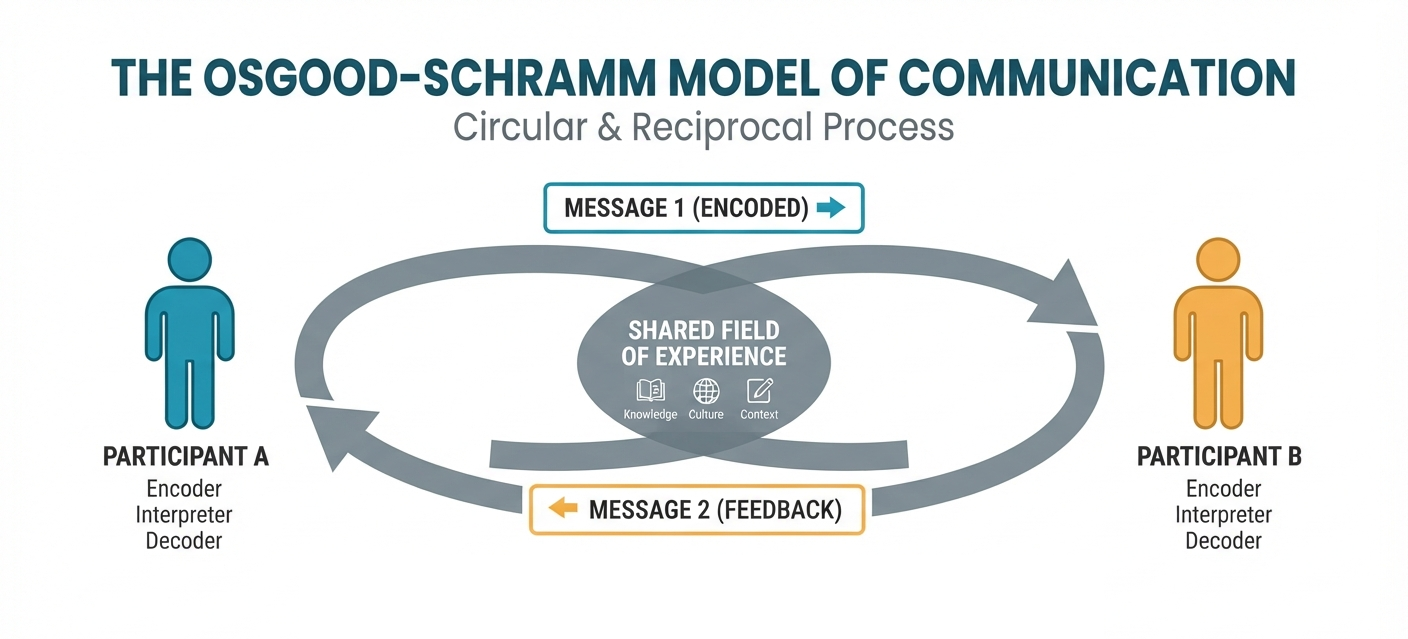
What if we suppose that all media exist in a cycle - that senders and receivers switch roles, and that there is always feedback? That there are barriers to communication that can affect meaning, and there are layers of physical, cultural, and social context that affect how we interpret meaning?
Then we have the Osgood-Schramm model, which is my current favorite.
Infographic
Osgood-Schramm model
By Ben Wilson
Now we have a communications model which allows;
- Every person to be an individual
- Many contexts to affect meaning (those contexts also affect what messages are appropriate to send)
- The understanding that power dynamic changes
- Each individual interprets actively, rather than accepting without understanding
You can extend this process to a one-to-many type of scale, but the infographic would look messy and complicated. It’s just a model, after all. If we add in a few things, we can turn this into a working mediated communication model.
Mediated communication is communication using specific media. It partially blends in Macluhan’s adage, “The medium is the message”, into a communication process. The core of mediated communication is the channel, also known as the medium, and it affects what types of information and meta-information you can send. In a text message, you can send certain emotes, emojis, gifs, and images, which allow you to create richer meaning in text conversations. In social media, the interaction between messages creates a semantic net, creating subcontexts that affect interpretation.
Each medium affects the way that messages which are carried across them are designed and interpreted, which makes mediated communication so interesting. Blending in Uses and Gratifications theory gives us the idea that certain types of people will be drawn to certain media, so as professional communicators, we can segment by understanding which audiences are on which media.
AI is a hot topic, and certain types of people are drawn to it. Some willingly, some unwillingly, but that doesn’t affect the core challenge; we, as professional communicators, need to understand how to encode our messages so they decode appropriately, even when filtered through AI.
Working it all into an AI-mediated comms model
If we make a mental model of everything so far, we get something like this:
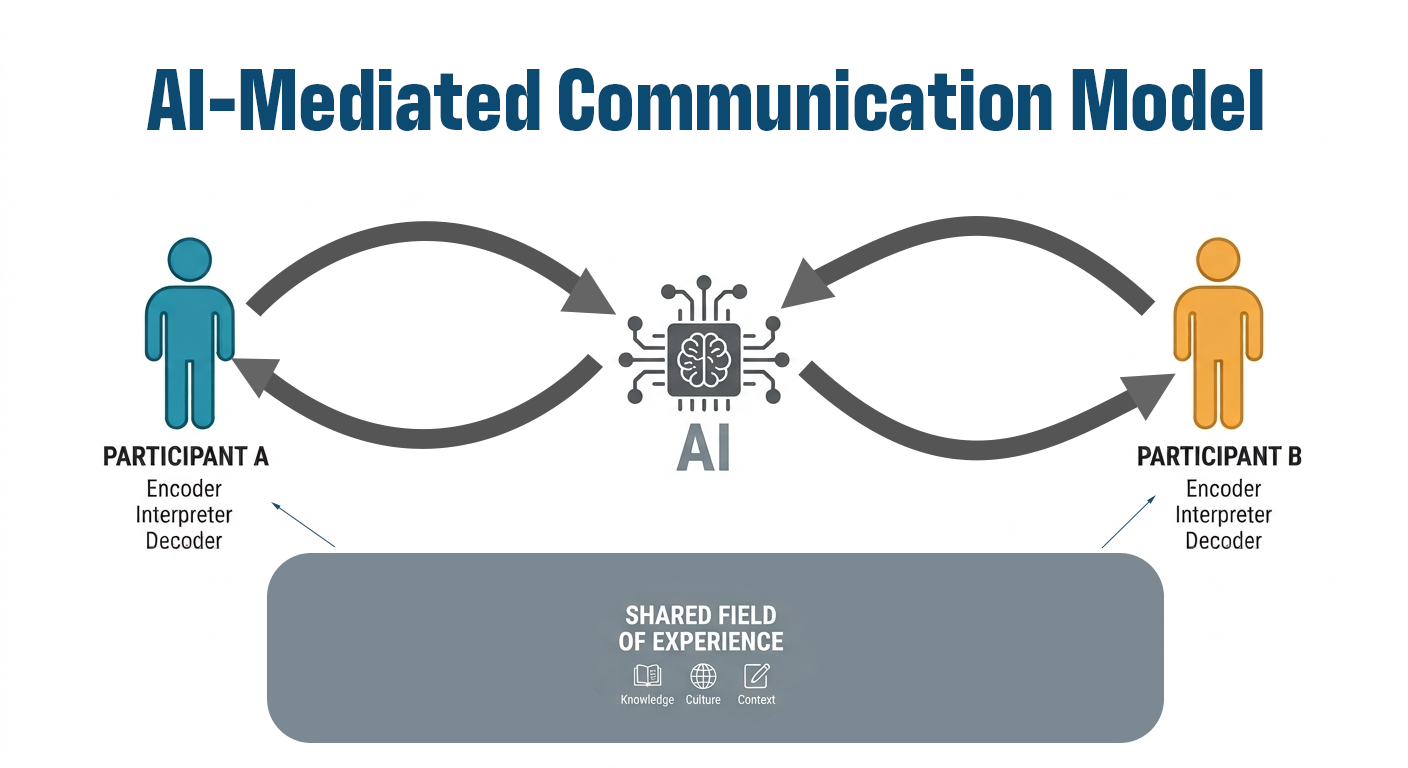
Infographic
AI-mediated comms model
By Ben Wilson
Which, while a model, does reveal some interesting things.
- Each individual party interacting with the AI channel forms their own mini-cycle.
- The human participants share the same field of experience, and they may have shared contexts. This does not apply to the channel! It has different contexts.
- Because there are now three encode/decode steps in the process, there is a higher chance of emergent phenomena occuring.
Does that fix everything? No. Making models doesn’t fix problems - it just gives us a different way to look at them. And that’s what we all need to do as professional communicators; examine the actual steps in the process, and work toward fixing them. Make strides.
Oh, and write for clarity. Clarity carries.